

Infios report finds tariffs are reshaping logistics execution in global trade
The US-focused research reveals tariffs are no longer a static cost for logistics leaders but a real-time execution variable that is actively managed across transport, routing and compliance.
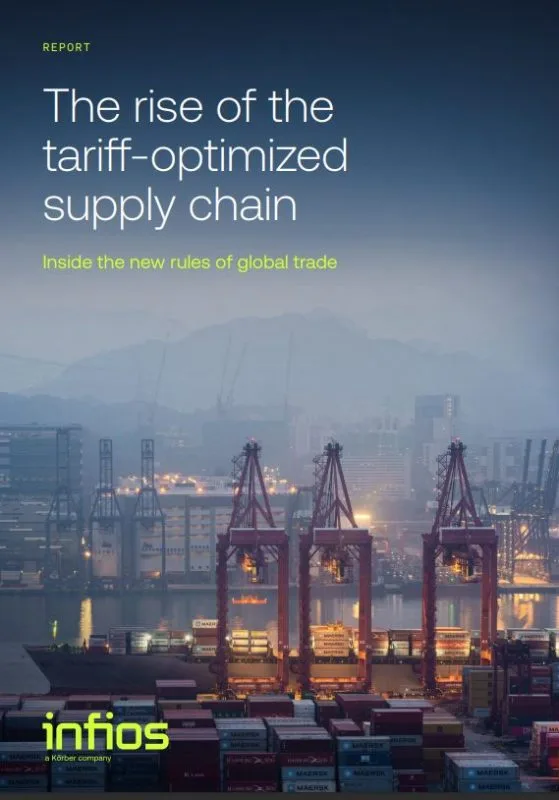
DRAWING ON year-over-year analysis of more than one million US customs entries, the report The Rise of the Tariff-Optimized Supply Chain: Inside the New Rules of Global Trade, shows how the 2025 US tariff changes have fundamentally altered logistics strategy. For operators, tariffs now directly influence mode selection, warehouse strategy and shipment design.
The logistics sector is responding in two phases. Initially, companies adopted short-term “panic routing,” shifting modes and accelerating shipments to avoid immediate cost exposure. This led to a sharp rise in air freight and trucking as speed overtook cost efficiency. Over time, however, a more structural redesign has emerged, with logistics networks being reconfigured for resilience and flexibility rather than lowest cost.
Key logistics insights include:
- Air freight share rose by around 12 percentage points and remained elevated, highlighting its role as a hedge against tariff risk rather than solely a premium option.
- Ocean freight declined by 10–12 points without recovery, signalling a long-term modal shift.
- Trucking increased by roughly 8 points, reflecting sustained nearshoring and shorter, more stable supply routes.
- Bonded warehousing expanded significantly, showing that duty deferral is becoming embedded in inventory strategy.
- Shipment consolidation increased, with higher-value loads moving less frequently, pointing to more strategic network planning.
The findings underline a critical shift: logistics execution is becoming a dynamic discipline.