

J&T expands automation as H1 parcel volume jumps 25% to 17.5 billion parcels
The firm has added 22 automated sorting-machine sets, while Southeast Asia parcel volume surged 71.2%.
J&T Global Express handled 17.50 billion parcels in the six months to 30 June 2026, up 25.1% on the 13.99 billion it moved in the same period last year.
The Hong Kong-listed operator, which runs express networks across Southeast Asia, China, the Middle East and Latin America, ended June with roughly 19,800 outlets, 260 sorting centres and about 13,380 line-haul vehicles, some 8,500 of them owned rather than contracted.
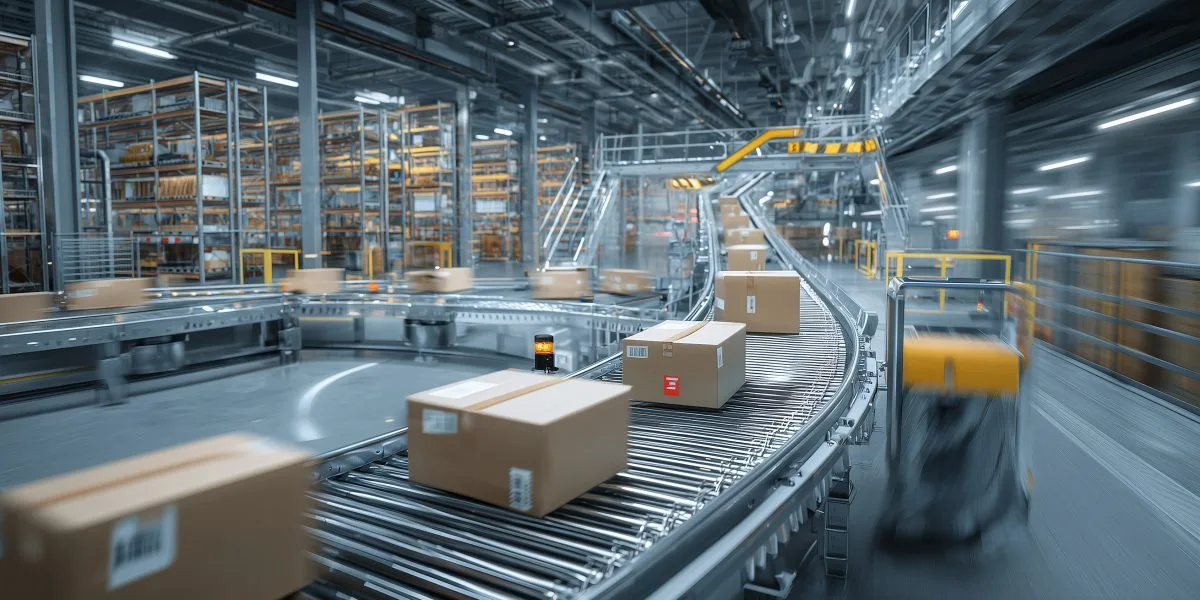
J&T had 435 sets of automated sorting machines installed globally at the end of June, 22 more than at the end of December. Eleven of the new sets went into Southeast Asia, where the company now runs 127 sorting centres and 75 automated sets; eight went into China; and three into what the company calls “Other Markets” (the Middle East, Latin America and Egypt), which have 52 sorting centres and 14 automated sets between them.
Volume growth in Southeast Asia and other markets
Southeast Asia surged to 5.52 billion parcels, up 71.2% year on year and equivalent to an average 30.5 million parcels a day. Analyst firm Frost & Sullivan puts J&T’s market share at number one in the region with 38.1% by volume, up 5.3 percentage points. It has around 6,100 line-haul vehicles in the region, a net increase of 300 since December, and roughly 1,300 network partners running last-mile outlets after a continued shift away from directly operated depots.
Other Markets moved 364.9 million parcels, up 119.9%, lifting share from 6.2% to 8.9%. The network there is still being built out, with more than 2,700 outlets and 480 line-haul vehicles plus branch vehicles.
China, still the biggest single market by volume, handled 11.62 billion parcels, up 9.6%, for an 11.6% share and fifth place behind four network-partner operators. Growth there was slower but ahead of the wider Chinese market, which the State Post Bureau put at 5.0%.
Unmanned delivery and warehousing expansion
On the last mile, more than 1,900 unmanned delivery vehicles were deployed across the network at the end of June, an 87% increase on the end of 2025. J&T says unmanned vehicle prices have fallen against 2025 levels and that local governments have widened road access to them. It has been working with network partners to adopt them in key cities.
In Southeast Asia, J&T has also set up a dedicated team to design integrated automation packages for individual outlets. The aim is to raise courier and outlet processing efficiency and cut running costs for the network partners who operate those sites, rather than just for J&T itself. The company says it will keep increasing outlet automation spend across Southeast Asia as volumes build.
J&T operated 272 warehouses globally at the end of June covering more than 1.01 million sq m, over 10.8 million sq ft. The company says later cut-off times can extend merchants’ selling windows, while integrated warehouse/transit-centre sites reduce transfers and improve delivery timeliness. Nationwide warehouse allocation is also being used to improve next-day fulfilment rates.
Revenue per parcel edges up
Revenue per parcel rose to USD0.44 from USD0.39, driven by a greater share of volume from Southeast Asia and Other Markets, where revenue per parcel is higher, as well as improved pricing conditions in China. Cost per parcel increased to USD0.38 from USD0.35, reflecting the growing contribution from Southeast Asia and Other Markets, where lower parcel density and less mature networks result in higher unit costs.
Revenue rose 39.5% to USD7.67 billion, with gross margin at 13.2% against 9.8% a year earlier.
Looking ahead, the company said it would keep replicating its Southeast Asian playbook in Latin America and would maintain “strategic initiative” on expansion into other regional markets.