

Much more can be done on warehouse lighting
Lutterworth Ecolighting MD Martin Needham says businesses can do more to cut costs and reduce CO2 emissions.
A report in the Financial Times indicated that as consumers increasingly adopted low energy lighting there was ‘nearly a third less electricity used to light homes than in 1997’. However, there are greater savings to be made by industry switching to light emitting diode (LED) or low energy bulbs.
Despite a clear return on investment, businesses often overlook what is one of the simplest, yet most effective ways of reducing energy consumption and cutting costs.
If we just look at the supply chain and logistics sector, there are hundreds of warehouses still operating with inefficient metal halide discharge lights or high-pressure sodium lighting across the UK.
Massive savings, both financial and environmental, can be achieved by replacing these with correctly specified LED systems. These can include additional energy reduction features, such as automatic units with built in programmable high bay PIR (passive infrared sensor) and daylight harvesting sensors – dimming technology to ensure lights only operate when required.
As an example, a leading third party logistics company was using mainly 400W metal halide high bay fittings at a 520,000 square feet distribution centre and by replacing these with an energy efficient lighting system has seen annual lighting energy costs cut by 83%, saving over £120,00 annually.
These savings are obviously significant but not uncommon. Companies typically make energy savings in excess of 70% and the ROI is rapid – usually within one to three years. Additional benefits include enhanced light levels providing safer working environments.
At Lutterworth Ecolighting we design, manufacture and install energy efficient lighting solutions in-house to deliver the best combination of cost and quality. These units are fitted into a wide range of ambient and chilled warehouses, along with industrial premises across the country. They are designed to replace traditional sodium lighting with fully automatic lighting systems that use individual motion detection and daylight dimming technology to ensure lights only operate when required.
In addition to substantial economic benefits, energy efficient lighting provides a sustainable contribution towards the fulfilment of long-term environmental objectives. Significantly lower energy consumption means a reduced carbon footprint and less impact on the environment.
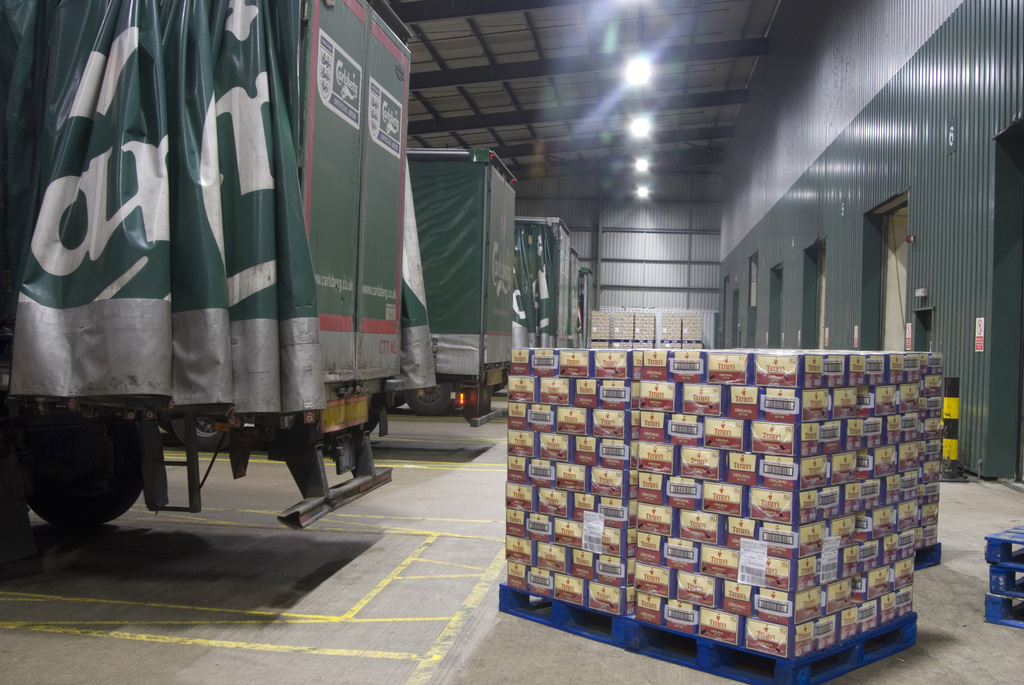
As mentioned, aside from the financial and environmental factors, the most obvious and instant benefit of energy-efficient lighting is the superior light quality that the new technology generates. The result of a lighter and brighter working environment is improved visibility and enhanced workplace safety for employees. This can have a significant impact on staff wellbeing; resulting in increased productivity and in turn further cost savings.
Working closely with customers, our team of fully trained engineers coordinate all installations carefully to ensure minimal disruption to day-to-day operations.
In another example, the numerous benefits of energy-efficient lighting have been recognised at Carlsberg’s national and regional distribution centres by the company’s consultants EHS Projects.
After working with Lutterworth Ecolighting for several years, Steve Power, Director of EHS Projects (a specialist sustainability and SHE compliance consultancy) reported that the lighting solution made a major contribution to Carlsberg’s ambitious commitments to planned and sustained carbon reductions. He also added that the installation of Ecolite technology into the national network of distribution centres was not only helping Carlsberg with this commitment, but also improved the working environment for the employees and generated significant cost savings for the business.
The substantial savings available through a change of lighting is gradually dawning on UK businesses and this is being reflected in the growing number of enquiries we are receiving – especially from 24-hour warehousing and distribution operations. Even companies with strict limits on capital expenditure are able to achieve worthwhile benefits through a simple review of their current lighting configuration and strategy.