
Designing Goods-to-Person systems for scalable operations
Many warehouses begin their journey towards automation with goods-to-person (GTP) systems. These systems improve safety, efficiency, and accuracy by removing the need for staff to walk between storage locations to collect items.
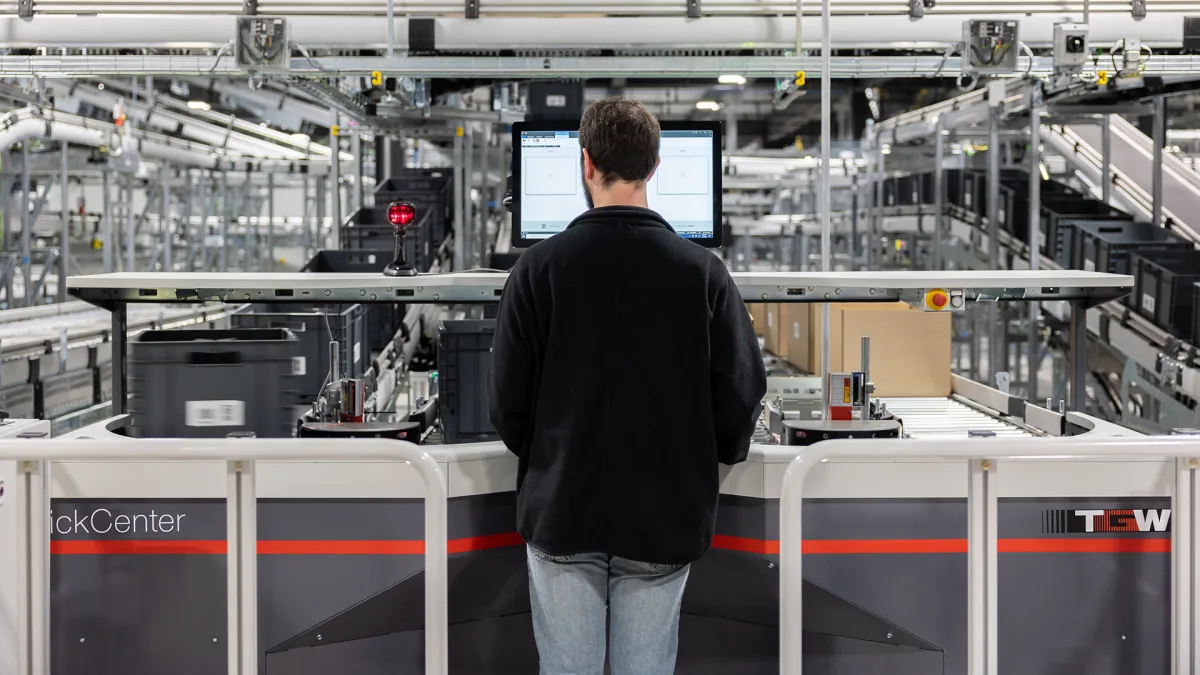
INSTEAD, AUTOMATED equipment transports totes or cartons from storage areas to fixed workstations, allowing pickers to remain stationary and focus on accuracy. Once selected, the containers are returned to storage automatically.
The case for automation
The principal advantage of goods-to-person automation lies in its scalability. A well-planned system not only meets current operational needs but also allows for gradual expansion as order volumes grow. Automation enables higher throughput, reduces manual handling risks, and lowers the chance of picking errors or product damage.
By contrast, manual fulfilment processes often struggle to adapt to fluctuating demand or rapid growth. Periods of peak activity can lead to congestion, higher error rates, and increased risk of injury from repetitive lifting or overexertion. Hiring additional staff may offer temporary relief, but it also raises costs and rarely achieves the same speed or precision as an automated environment.
Scalable design and integration
Scalable automation is supported by both equipment and software. Shuttle and automated storage and retrieval systems (ASRS) can be configured for high-density storage, fast access, and phased expansion. Shuttle-based designs focus on sequencing and rapid movement, while mobile-robot systems allow flexible layouts without fixed conveyor networks.
Software integration is essential for coordinating automated processes. Warehouse Management and Execution Systems (WMS/WES) provide real-time visibility, synchronising stock movements, tracking performance, and helping teams anticipate maintenance or process adjustments before problems arise.
Building for the future
Different sectors benefit from scalable GTP design in distinct ways. Retail and consumer goods operations face unpredictable surges in demand, while food and cold-chain facilities must handle temperature-sensitive products quickly and safely. Industrial and automotive logistics, with their wide variety of components, also rely on modular systems that adapt as inventories evolve.
Building for scalability requires long-term planning, not one-off investment. A phased approach, supported by regular system evaluation, maintenance, and staff training, ensures that warehouse automation continues to deliver value as operations expand.
Goods-to-person systems are not a static solution but a foundation for continuous improvement—enabling warehouses to grow, adapt, and meet future challenges efficiently and safely.
Many organisations have realised the long-term value of scalable, adaptable goods-to-person automation. TGW Logistics specialises in modular, growth-ready solutions and provides ongoing support throughout the entire lifecycle of automation systems and software.
TGW Limited
Email: [email protected]
Website: http://www.tgw-group.com
Phone: 01858 468855
Address:
Falcon Court
Off Rockingham Road
Market Harborough
Leicestershire
LE16 7FQ
United Kingdom