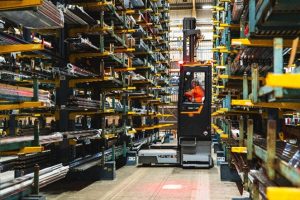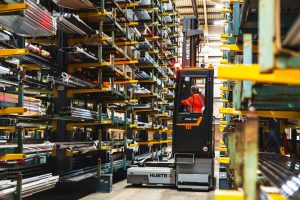

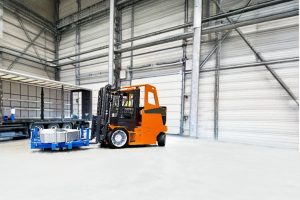
Hubtex has developed the control concept for its multidirectional trucks
The latest generation of Hubtex Information Terminal (HIT4), a newly developed joystick with extended functionality, and a display controller are the key components of the new system.
TOGETHER, THEY form an operating system designed around the needs of multidirectional forklift operators.
Developed from extensive real-world customer feedback and the growing integration of advanced assistance systems, new concept brings these elements together in a unified, intuitive user interface.
Beginning in the second quarter of 2026, the system will be introduced as a standard feature in various configurations across Hubtex’s multidirectional forklift product lines.
The Hubtex Information Terminal (HIT4) serves as the operator’s central source of information, clearly displaying all relevant truck data, including wheel position, travel speed, and battery status, along with information from integrated driver assistance systems. The aim is to create a more standardised operating experience while making vehicle control even more intuitive for operators.
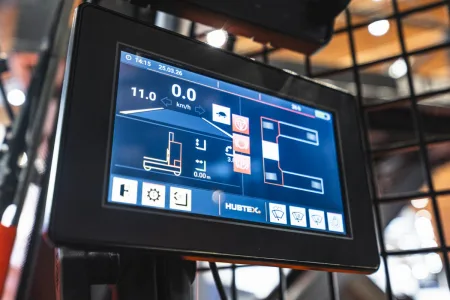
The central display consolidates machine, energy, and safety information in a clear and structured way. Icons, colour coding, and plain-language messages are aligned for quick comprehension. Alerts, warnings, and fault messages are prioritised so operators can immediately identify the most critical information in any situation. This helps reduce training time, simplifies transitions within mixed fleets, and improves process reliability in narrow aisles as well as indoor and outdoor applications.
As the direct successor to the HIT3, the HIT4 builds on a familiar operating logic while advancing it significantly. The display features standard touchscreen functionality and, in the PHOENIX series, can also be operated via a display controller with clearly arranged function keys – even when wearing gloves. Adaptive brightness control automatically responds to changing lighting conditions, while manual adjustment options ensure the screen remains easy to read, even from angled viewing positions.
Ergonomics refined: the new joystick
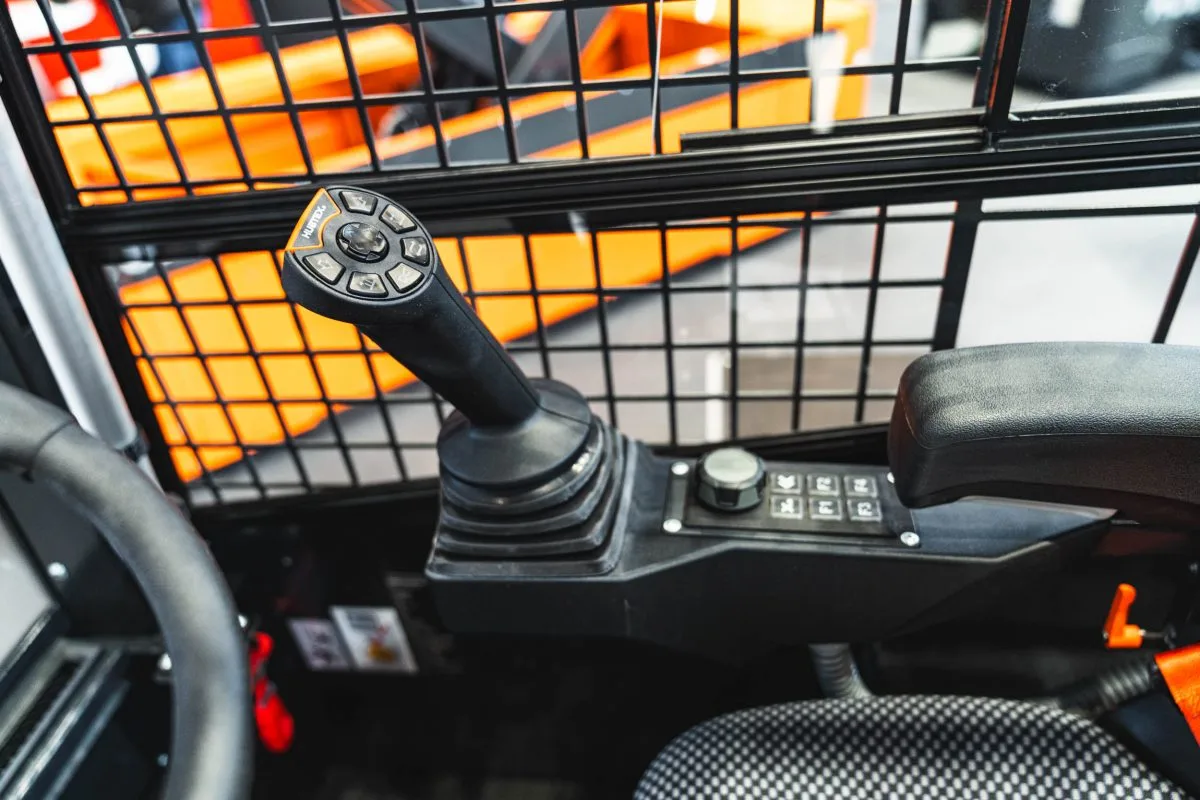
Hubtex has also comprehensively redesigned the joystick. The development objective was clear: to preserve the functions operators already know and trust, make the transition easy for existing customers, and deliver a noticeable improvement in ergonomics.
The new joystick stands out with its redesigned grip and enhanced tactile and visual layout. Features such as a newly shaped thumb rest and added functionality support greater comfort during long shifts. All controls are positioned for easy thumb access, while tactilely distinct, illuminated buttons enable safe, intuitive operation even in low-light environments. A centrally positioned directional rocker further supports frequent changes in travel direction and contributes to more ergonomic, lower-fatigue operation.
Display controller
Another key element of the new operating concept was developed specifically for the PHOENIX series, where a wide range of assistance systems – particularly for narrow-aisle applications – are often integrated. The combination of the HIT4 display and the display controller makes these systems much easier to operate.
Typical assistance-system prompts shown on the display, such as guidance on ideal racking position or appropriate travel speed, help operators maintain smooth, focused driving without obstructing visibility of the load or travel path with additional monitors.
With the new display controller, Hubtex is reinforcing its focus on rugged, industrial-grade usability. Designed specifically for demanding working environments, the controller enables safe, intuitive operation – even with gloves.
At the same time, it reduces the need for operators to reach towards the display and speeds up repetitive tasks. In combination with the HIT4, it creates a clear and ergonomic separation between travel and work functions, helping operators work more efficiently and safely.
Transparency
The new system also offers clear advantages for service and maintenance. Structured diagnostic paths, clearly labelled parameters, a detailed event history, and optional remote access enable faster troubleshooting and help reduce downtime. Its modular architecture also makes it easy to integrate future functions without changing the familiar operating logic – an important foundation for upcoming assistance and safety features.
Overall, the combination of touchscreen, controller, and joystick reduces hand movement, speeds up repetitive actions, and enables precise manoeuvering in confined spaces. At the same time, it allows new assistance systems to be integrated without adding unnecessary complexity for the operator.