
Key question: Can your robots flex?
Warehouse environments have never been completely predictable and Denis Niezgoda argues the level of variability operators are being asked to manage is actually increasing.
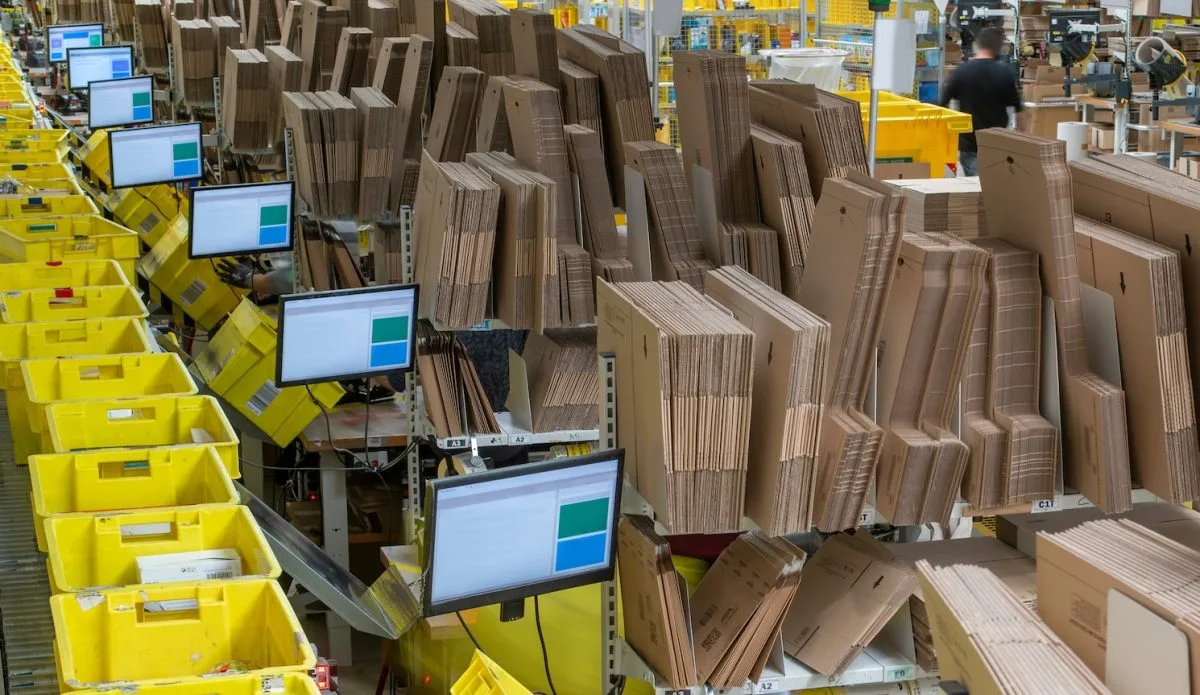
ECOMMERCE DRAMATICALLY expanded the number and variety of SKUs moving through fulfilment centres, but increasing complexity is not a historical matter. For example, packaging materials, formats and fill levels are evolving as businesses respond to changing consumer expectations, sustainability goals and regulation.
The EU’s Packaging and Packaging Waste Regulation (PPWR) is part of this shift. New requirements are prompting businesses to review how packaging is designed, used and documented across their supply chains, with 93% of British businesses saying they have already been affected, or expect to be affected, by the regulation.
For warehouse automation, the significance is not the regulation itself. It is that the environment automation operates within will continue to change. That changes what operators should be asking of robotics.
Judging performance
For years, the robotics industry was judged on whether a task was possible at all. Could a robot navigate a warehouse autonomously? Could it identify an item? Could it successfully complete a pick? Many of those questions have been answered in increasingly mature applications. The question that matters today is whether those capabilities hold up at volume, in conditions that continuously change.
This shift in what counts as proof shows up in the numbers operators live with every day. Even an illustrative 99% success rate sounds near-perfect until you scale it to an operation running thousands of picks an hour. At that point, 1% becomes a steady stream of failed picks eating into throughput.
The gap between a demo and a deployment is exactly this: the difference between performance under ideal conditions and performance in a live warehouse, where SKUs, packaging, order profiles and workloads are constantly changing. And that gap is only getting harder to close as variability becomes the baseline rather than the exception.
The variability challenge
Packaging is a good illustration of this shift. Materials, formats, dimensions and fill levels are continually evolving. E-commerce has already introduced enormous variety into fulfilment environments, from rigid cartons and irregularly shaped products to flexible bags and partially filled packages. Sustainability targets and new packaging requirements are adding another dimension to that evolution.
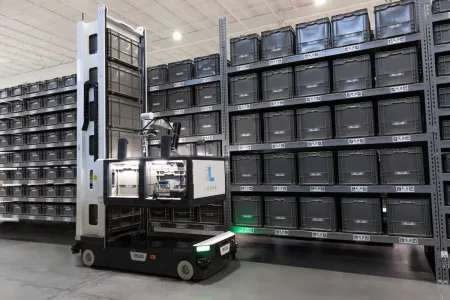
PPWR sits within this broader trend. Rather than assuming that regulation will result in any one particular change to packaging shape or format, operators should expect the packaging mix moving through their facilities to continue evolving.
For automation, that distinction matters. Systems cannot rely on every item arriving in a predictable form or on operating conditions remaining exactly as the system was originally designed or trained to expect. They need to recognise, interpret and respond to variation as it occurs.
Adaptability depends on more than the gripper
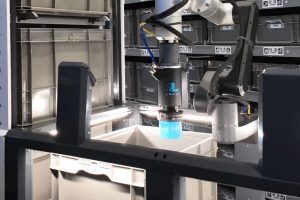
Grasping is one of the clearest examples of where warehouse variability becomes a technical challenge, but it cannot be solved through mechanics alone. Before a robotic system can successfully grasp an item, it first has to understand what it is dealing with. Is the package rigid or flexible? Is it sitting at an unexpected angle? Has a carton become compressed? Is the surface suitable for the expected method of handling?
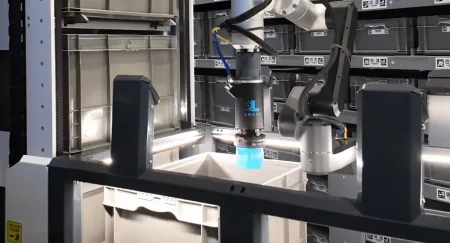
That makes perception a critical layer of autonomous fulfilment. Sensing and visual recognition allow systems to interpret what is in front of them, while adaptive grasping provides the physical ability to respond to that information. But neither operates in isolation. Reliable automation depends on the combination of perception, orchestration and execution: understanding what is happening, deciding how best to respond and then carrying out that action successfully.
The goal is not simply to build a better gripper. It is to build systems that can adapt their behaviour to the item and situation in front of them rather than expecting every item to conform to predetermined conditions.
An experienced warehouse worker does this instinctively. If something feels different in their hand or looks different on a conveyor, they adjust. Increasingly, automation is being asked to manage that same variability at scale.
The labour picture makes adaptability more important
Warehousing is short-staffed across major markets. That makes it more important that automation can manage variability and exceptions without constant human intervention. Where workers have traditionally absorbed unexpected conditions instinctively, automation now has to do the same, reliably, and at scale. As automation takes on more of these tasks, operators also need to reconsider how they evaluate whether a system is actually working.
Operators need a different scorecard
Picks per hour and SKU coverage still matter, but on their own they no longer tell operators enough about whether an automation deployment will succeed.
A more revealing question is how a system behaves when it encounters the SKUs, packaging formats and operating conditions it was not specifically optimised for.
Operators should be looking closely at exception rates: how often does the system encounter something it cannot handle? At recovery: how effectively does the system respond once an exception occurs? At consistency: does performance hold up over time and across different conditions, or only in the scenarios it was tuned for? And at the degree of human intervention required: does an exception mean a quick automated adjustment, or does it pull a person off other work to fix?
Those measures matter because variability is not an edge case in modern fulfilment. It is part of everyday operations. Reliability under changing conditions will therefore be a decisive factor in whether an automation investment scales successfully or simply shifts manual work from one part of the warehouse to another.
What comes next
Warehouse robotics has made enormous progress. Navigation, fleet orchestration and the movement of goods around facilities are increasingly mature capabilities. The next challenge is making autonomous fulfilment just as resilient to variability.
That requires more than solving any one mechanical problem. It means bringing together perception, orchestration and execution so robotic systems can understand what is happening around them, make the appropriate decision and carry it out reliably.
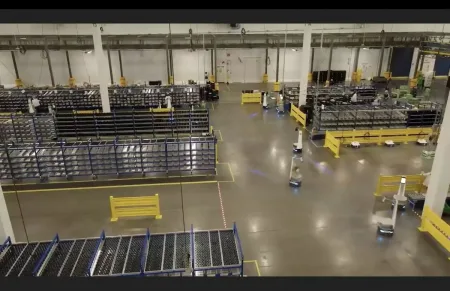
Packaging evolution is one example of why this matters. E-commerce complexity, changing product mixes, fluctuating volumes and labour pressures are others. Together, they are creating fulfilment environments where the only constant is change.
The question operators should therefore be asking is no longer simply, “Can this robot do the task?” It is: “Can it keep doing it when the conditions change?”
Denis Niezgoda, chief commercial officer international, Locus Robotics