

Unlocking scarce logistics space with automated loading and unloading
In an ideal world, retail distribution would operate from state-of-the-art, energy efficient facilities. The reality, of course, is that top quality logistics space is at a premium and few retailers can afford the cost and risk associated with relocating. Most must squeeze as much value as possible from existing distribution centres. As Wouter Satijn, Chief Revenue Officer, Joloda Hydraroll, explains, automating unloading and loading processes can transform the use of existing space, improving productivity up to fourfold and delivering essential operational agility.
Space premium
Almost half (47%) of warehouse occupiers expect to expand within 12 months, yet logistics space remains at a premium across the UK and Europe. Adding space is increasingly expensive, particularly as new energy performance standards are expected to leave upwards of 50% of UK warehouses unlettable by 2030.
With retailers understandably seeking more modern, energy-efficient facilities to meet ESG goals, reduce operational costs and embed new technological solutions, the cost of usable space is inevitably rising. But do organisations really need as much space as they think?
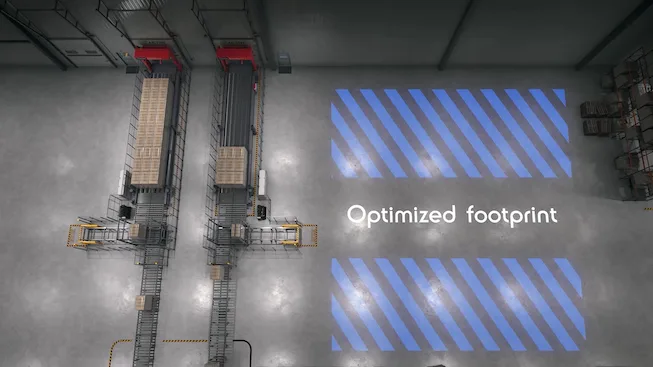
Many distribution centres already use warehouse management systems, automated storage and retrieval, conveyors and autonomous mobile robots to improve agility. It is the continued reliance on manual loading and unloading processes that is acting as a serious constraint to efficient operations. Goods awaiting dispatch or put-away take up valuable floor space, as do fleets of forklifts requiring operating lanes, parking and charging areas. Rethinking this aspect of operations could deliver far more value without adding expensive space.
Automated loading and unloading
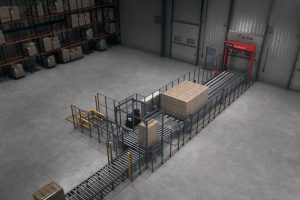
Replacing manual processes and reducing forklift use with automated loading technologies radically reduces turnaround times. The rapid movement of goods significantly reduces the volume of storage space required on site, while the reduced reliance on forklifts frees up space previously used for forklift storage and charging. With rapid turnaround of trucks, there is less need for space for lorries to park up and wait to unload or load, freeing up external space.
Automated trailer and container loading systems, including slipchain, moving floor and trailerskate, can reduce load time from 45 minutes to under five. By reducing loading bay bottlenecks, this adoption of automated loading processes is enabling retailers and logistics operators to double, triple, even quadruple throughput from the same distribution centre.
The released capacity can support other priorities, from creating dedicated space for more effective returns handling to introducing innovative promotional packing processes to support short run, events themed marketing campaigns.
Driving continual improvement
Automation within the loading bay also addresses the lack of visibility associated with manual loading operations. Removing this information black hole supports real-time decision making that can further optimise space utilisation. For example, trucks can be reallocated to different bays to maximise fill rates.
It also provides essential business agility. Retailers can seamlessly handle seasonal peaks, the expansion of SKUs, returns volumes or short run promotions without needing to expand beyond the existing footprint.
Conclusion
Pressure on logistics space is predicted to continue for the foreseeable future, and the ability to achieve expansion goals without the cost, risk and upheaval associated with obtaining another facility offers immediate value for money. By overhauling loading and unloading operations, replacing slow manual processes with highly efficient automated technologies, retailers also create an opportunity to reconsider space requirements to meet predicted business needs. Rather than endure the constraints of expensive, even unavailable logistics facilities, retailers can now optimise existing distribution centres to prioritise revenue generation and future innovation.
Related posts