


That small sign on your racking deserves your full attention
Walk into any modern warehouse and there will be a large structure dominating the room – your racking. While the simple structure may look unremarkable, it just so happens to be doing one of the most important jobs, safely holding tonnes of stock above employees’ heads.
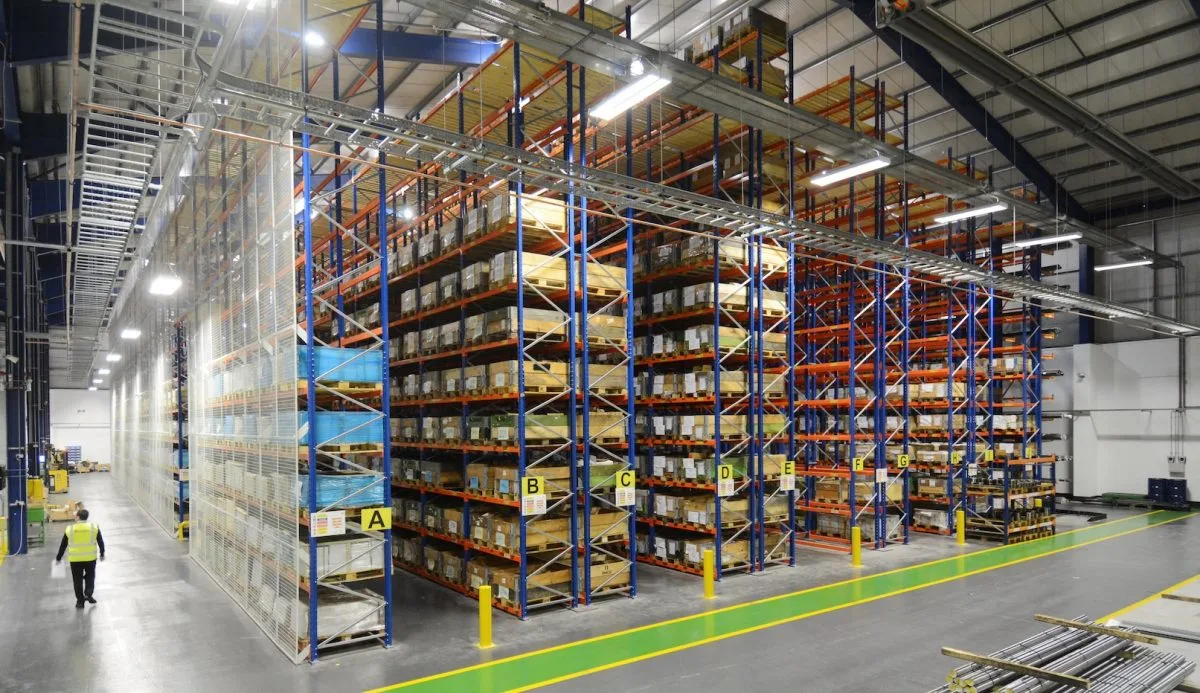
BUT THAT racking is a piece of precisely engineered structure. As a warehouse owner or manager, you need to know that it has defined limits on the weight it can hold. Everyone working around it should know this information. That communication comes down to a crucial but often overlooked item: the Load Notice.
What is a load notice and why does it matter?
A load notice is a safety sign fixed to racking bays that sets out its safe working load. It tells warehouse staff exactly how much weight a beam level can hold, how much a full bay can carry, and how that weight should be distributed across pallets.
In a large facility with many racking runs, potentially to hold a variety of different loads, this information cannot simply live in someone’s memory. Operatives need reliable reference at the point of use.
Make no mistake, the consequences of getting this wrong are serious. Overloaded racking does not fail in a small way. A structure carrying tonnes of stock that is pushed beyond its limits can and does collapse suddenly. Anybody working nearby are at a high risk of being seriously injured.
Poor loading practice is one of the three most common causes of racking-related safety incidents, as well as bad design and inspections not carried out properly.
Is a load notice a legal requirement?
This is a question warehouse owners often ask, and the answer matters more than you might think.
Racking is classed as work equipment, which brings it under the Provision and Use of Work Equipment Regulations. As an employer or manager in a warehouse, you must keep it maintained and ensure your staff are trained to use it. You are also required to provide all the health and safety information needed to work with it.
Because the notice practically functions as a safety sign, it also falls under the Health and Safety (Safety Signs and Signals) Regulations, which govern and assess how such signs should be coloured and displayed.
What should appear on the sign
For the people working around the racking, the load notice is a constant, at-a-glance reference.
A properly specified load notice, in line with SEMA guidance, is built around three sections. The general information section covers the key safety instructions described above. It reminds them to report any damage they spot, warns against climbing the structure, and prohibits unauthorised alterations that could compromise its strength. It also directs them to the racking supplier when a query arises, since the supplier holds the detailed knowledge of that specific system’s capabilities.
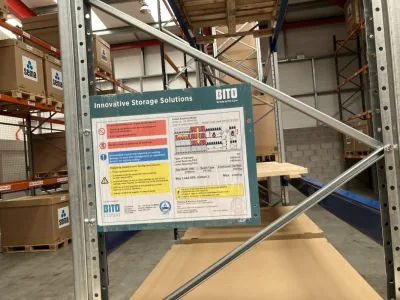
The specific information section sets out the safe working load per beam level and the total bay load, along with the critical beam heights that the rack was designed around. Changing these dimensions, even by removing a single beam, can dramatically reduce carrying capacity.
The administrative section gives the supplier’s contact details, so any damage or query can be escalated quickly to the people who understand the structure best.
Don’t forget, your employees will need to go on a training course such as our Rack Safety Awareness course to learn how to read the Load Notice and recognise racking damage.
What to do if a load notice is missing
A missing or illegible load notice should never be treated as a minor administrative gap.
Both Visual Inspections, carried out by your Personal Responsible for Racking Safety (PRRS) and your Expert inspection, carried out by a SEMA Approved Racking Inspector, should always check the load notice is present and legible.
If a sign has faded, been damaged, or simply disappeared, it should be replaced immediately. A replacement should be immediately arranged and must match the exact Safe Working Load calculations certified by the original racking manufacturer or supplier – never guess the capacity!!
For more information, take a look at our Load Notices video.