
Witron launches Order Picking Network
The automation leader is making a paradigm shift from traditional optimisation within the logistics centre towards end-to-end, data-based, and dynamic network optimisation.
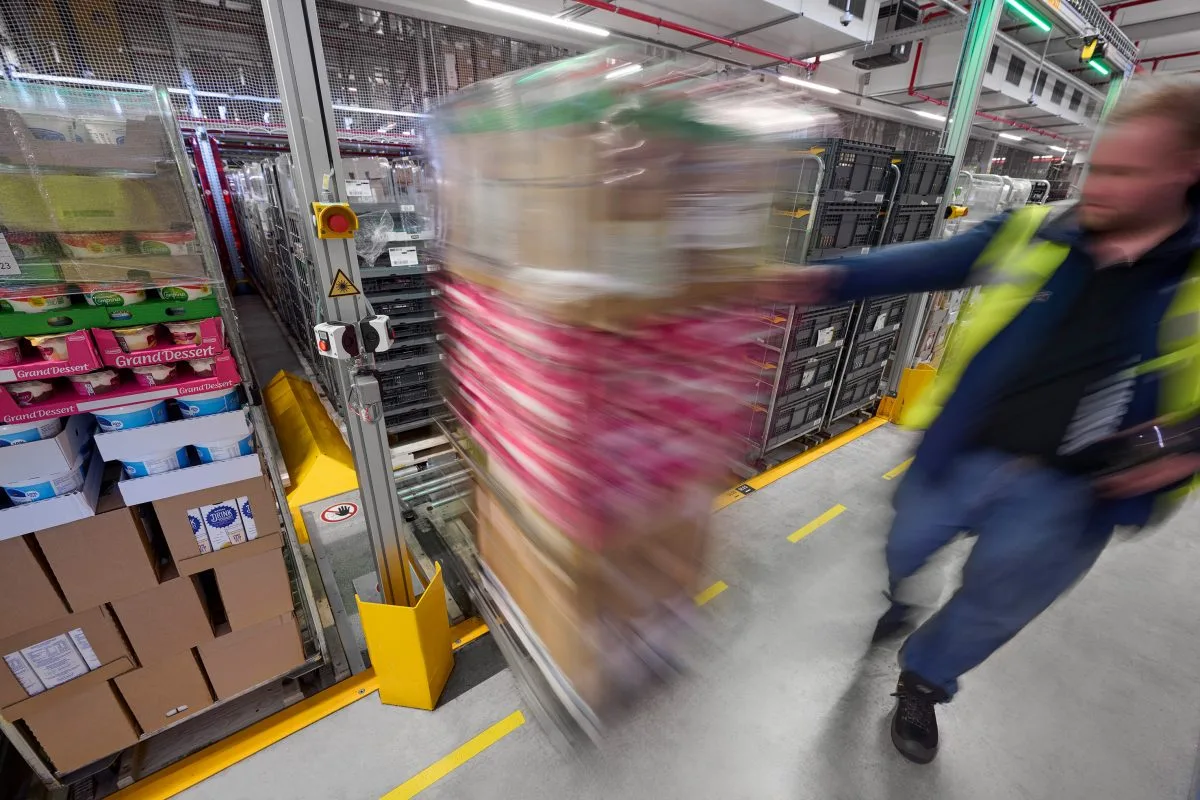
Witron managing director Helmut Prieschenk describes OPN as neither a standalone automation solution nor a pure software product. Instead, it represents a new environment for redefining the order picking machine. It is no longer an isolated service centre within the warehouse, but an integral part of a larger, integrated network.
Witron has been systematically preparing for this evolution. First, the highly automated Order Picking Machinery (OPM) revolutionised grocery retail logistics. This was followed by OCM (Omni Channel Machinery), which combined store replenishment and home shopping under one roof. Now, many customers are demanding the next step. While in-warehouse technology remains crucial, perspectives must broaden beyond the machine itself and beyond the warehouse.
The key question is: how does the customer’s overall system perform? This question marks the starting point for OPN. Witron shifts the focus from individual systems to the entire value chain. The first level is defined by the distribution centre, where availability, performance, precise project execution, and technical excellence are key.
On a second level, the perspective expands to the supply chain ecosystem, extending horizontally from the producer through transportation, national and regional warehouses all the way to the store or end customer.
“This is where true end-to-end thinking begins for WITRON. The warehouse is no longer seen merely as a technical unit, but as a component within a network designed to maximise overall value,” explains Prieschenk.

Network logic
The third level extends even further. Across the enterprise, all relevant business areas are integrated into a seamless end-to-end network logic. To achieve this, different organisational units are optimised holistically to identify the “sweet spot” where the overall system performs at its optimum level without creating suboptimal outcomes in individual clusters. This defines the core of OPN: not the isolated efficiency of a single area, but its impact on the entire network.
An increasing number of companies are targeting this enterprise-level sweet spot. They view the supply chain as a strategic enabler.
“When logistics is professionally integrated and executed at a high-performance level, it goes beyond a pure replenishment function and becomes an enabler of services and capabilities that were previously not possible,” explains CEO Karl Högen.

This is where OPN makes a difference. Instead of fixed delivery dates, defined packaging logic, and standardised order patterns, the focus shifts toward dynamic control: intelligent handling of store orders, balancing the network across multiple levels, differentiated network management based on demand patterns such as average days, peak days, weekly or seasonal cycles, as well as promotions, and end-to-end inventory management across the entire supply chain. A decisive factor is the ability to use recurring data patterns interactively and dynamically to reach the overall sweet spot. Equally important is that data and intelligence are leveraged broadly and across silos to enable these optimisations.
Key principles
Three guiding principles define their approach: Premium store service, end-to-end productivity, and preservation. Premium store service focuses on the customer and the store. Products must arrive in the right quantity, at the right time, and in the right quality – exactly where they are needed. End-to-End Productivity inherently goes beyond local optimisation. True productivity only emerges through the interaction of transport, stores, and distribution centres. Preservation extends this perspective by incorporating sustainability, ergonomics, long-term performance, and responsible resource use.
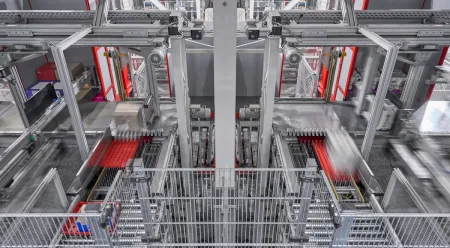
From a technical perspective, this encompasses a range of elements – including design, consulting, facilitation, software tools, algorithms, data integration, and simulation logic – depending on the application. The key is enabling existing systems to evolve within a larger ecosystem that benefits the entire enterprise.
Witron analyses the customer’s infrastructure, including its installed base, logistics centres, stores, transport routes, and their interdependencies. This creates a ‘heat map’ of the network, identifying where optimisation generates real value – for the store, the CFO, and the company as a whole. The approach identifies interdependencies and translates them into targeted technical, organisational, and data-driven measures.
Scaling the concept
The concept becomes even more compelling when it comes to scaling. Witron does not view OPN solely within a single customer organisation. A customer with multiple distribution centres already operates its own customer-specific OPN. These customer-specific networks can be integrated into a broader learning system. While customer-specific data and competitive advantages remain strictly separated, standardised processes and patterns unlock additional value. If packaging, coding, or machine parameters for comparable products are aligned across different countries or customer environments, Witron can leverage synergies and eliminate the need to repeat identical optimisation efforts. This enables OPN to continuously evolve, learning from every pilot project and every validated pattern.