

What every warehouse manager should know about their racking
Picture the scene… your annual racking inspection is complete, the report issued, and you file it away – another compliance task ticked off. That’s until a damaged upright gives way and your stock crashes into an aisle injuring an employee.
WHEN THE HSE investigates, they immediately ask for the inspection report. It clearly flagged the damage. The problem is, while damage was identified the repairs weren’t actioned. Instead, the report went into a drawer, and stayed there until the next inspection date.
So, who is responsible – the supplier, the inspector or does ultimate accountability sit with the warehouse senior management team?
Warehouse responsibility
Many assume that hiring approved suppliers and installers and booking regular inspections is enough to meet Health & Safety Executive (HSE) obligations. It isn’t. Responsibility can’t be outsourced. An expert inspection does not transfer the duty of care to the inspector. Their job is to identify problems. Yours is to fix them.
In reality it’s the warehouse directors, managers and health and safety manager who must take ultimate accountability.
When something goes wrong, it is your decisions that are examined, and you are liable. If the HSE investigates they will look at whether you have been negligent in your duties and followed correct process. If they find an issue they could prosecute, resulting in reputational damage, hefty fines, and even a prison sentence.
Knowing the regulations
Racking is classed as work equipment and falls under the Health and Safety at Work Act and the Provision and Use of Work Equipment Regulations (PUWER). Both require equipment to be maintained in a safe condition.
For warehouse-specific guidance, HSG76 Warehousing and Storage sets out best practice. It covers racking and shelving alongside manual handling, working at height and site transport. SEMA Codes of Practice go further still, providing detailed guidance on the design, installation, use and maintenance of storage equipment. Meeting these requirements means building racking safety into your day-to-day operations.
Turning regulations into practice
Knowing the regulations is only a starting point – it’s how you implement them that will protect your business.
The starting point is a risk assessment that considers how your racking is used and loaded, and how it is exposed to impact.
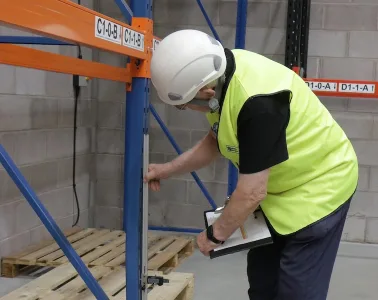
Train employees on how to recognise racking damage and know where to report an issue. You should appoint a Person Responsible for Racking Safety (PRRS) who has been trained on how to recognise damage, correct loading and carries out regular Visual Inspections.
You must also appoint a qualified professional, such as a SEMA Approved Racking Inspector (SARI), to conduct the Expert Inspection. This assesses the structural stability of your racking, check compatibility with the equipment operating around it, confirm correct loading practices and report on damage.
The report is where the real work begins
Both Visual and Expert inspections should categorise damage using a colour-coded system which is recorded on the report. What happens next is where too many warehouses fall down.
Inspection findings must trigger a process with damaged bays isolated (where required) and a racking installer or supplier booked to undertake the repairs. You then need to check that the person undertaking the repairs is approved by the manufacturer or it could invalidate the warranty. For example, some SEMA Approved Manufacturers authorise SEMA Approved Members to carry out repair work on their behalf.
You should also keep a clear record of all repair work and who carried it out. If the HSE ever comes calling, a clear paper trail showing damage identified, actioned and resolved is your strongest defence.
Safety starts at the top
While inspections, trained suppliers and your employees all play their part in keeping the warehouse safe – none of that works without leadership setting the tone. The senior management team need to know their responsibilities, the correct processes to follow and then instil a culture of safety.
Support is on the way. Launching September 2026, SEMA’s new Duty Holders Course has been designed for directors, warehouse operators and those responsible for workplace safety. The two-hour online session covers why you can’t delegate racking safety and how to protect your business and your employees. Those attending the course will gain vital practical knowledge of risk assessments, industry regulations, the importance of inspections and racking protection. It will also explain the role of the PRRS, why acting on the inspection report isn’t optional and why ignoring recommendations can carry serious legal consequences.
Follow SEMA on LinkedIn to be the first to hear the details.