
Toyota digital twins to cut autonomous forklift commissioning time by up to 50%
Toyota Material Handling Europe says simulation and digital twin technology, developed with NVIDIA and SoftServe, can cut the time needed to commission autonomous forklift solutions by up to 50%, reducing disruption for customers at go-live.
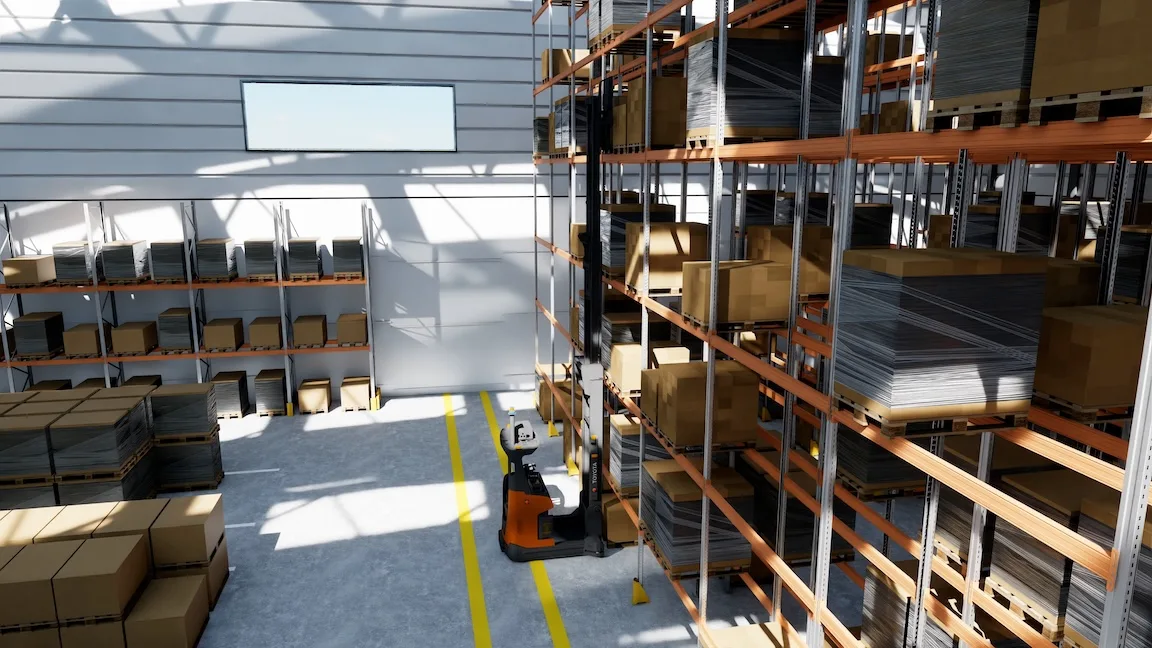
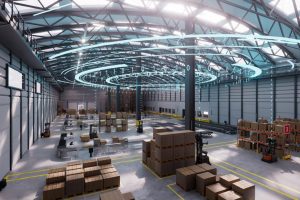
TOYOTA NOW validates autonomous vehicle behaviour in real-time, physics-based simulation before a solution reaches a customer site. It has built NVIDIA Omniverse libraries and the Isaac Sim robotics simulation framework into its development pipelines, and SoftServe engineered the digital twin environment.
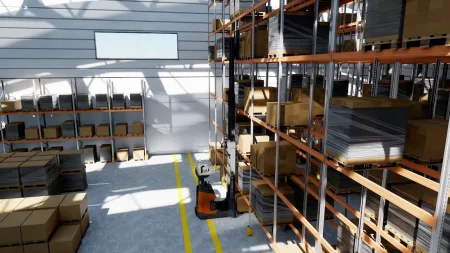
The twins simulate factory layouts and test forklift navigation, safety logic and customer-specific edge cases, including operation alongside people, manual forklifts and mixed traffic in the warehouse.
Johan Rosén, senior vice president of research and development at Toyota Material Handling Europe, said: “By identifying and resolving issues earlier in the process, we can reduce implementation effort, accelerate customer value, and deliver automation solutions with greater confidence.”
The companies are also applying vision AI. To train a camera-based pallet detection module, they generated synthetic data with Omniverse and augmented it with NVIDIA Cosmos models, which improved object-detection recall by more than 70% on real-world warehouse datasets.
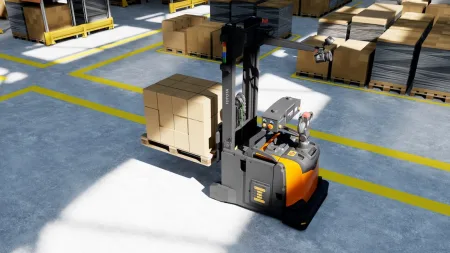
The initiative targets up to a 40% reduction in time to market, alongside the 50% cut in commissioning effort.
Ernesto Dominguez, president and chief executive of Toyota Material Handling Europe, said the aim was “zero muda”, the Toyota Production System term for waste, so that customers’ automated and autonomous operations run without lost time or resources.