


The agility advantage
In the world of logistics, the last five years have felt less like a business cycle and more like a gauntlet. Dionne Redpath, group chief operating officer and warehouse division director at Europa Worldwide Group tells Logistics Matters editor Simon Duddy the operating environment remains defined by volatility, cost pressure and constant recalibration.
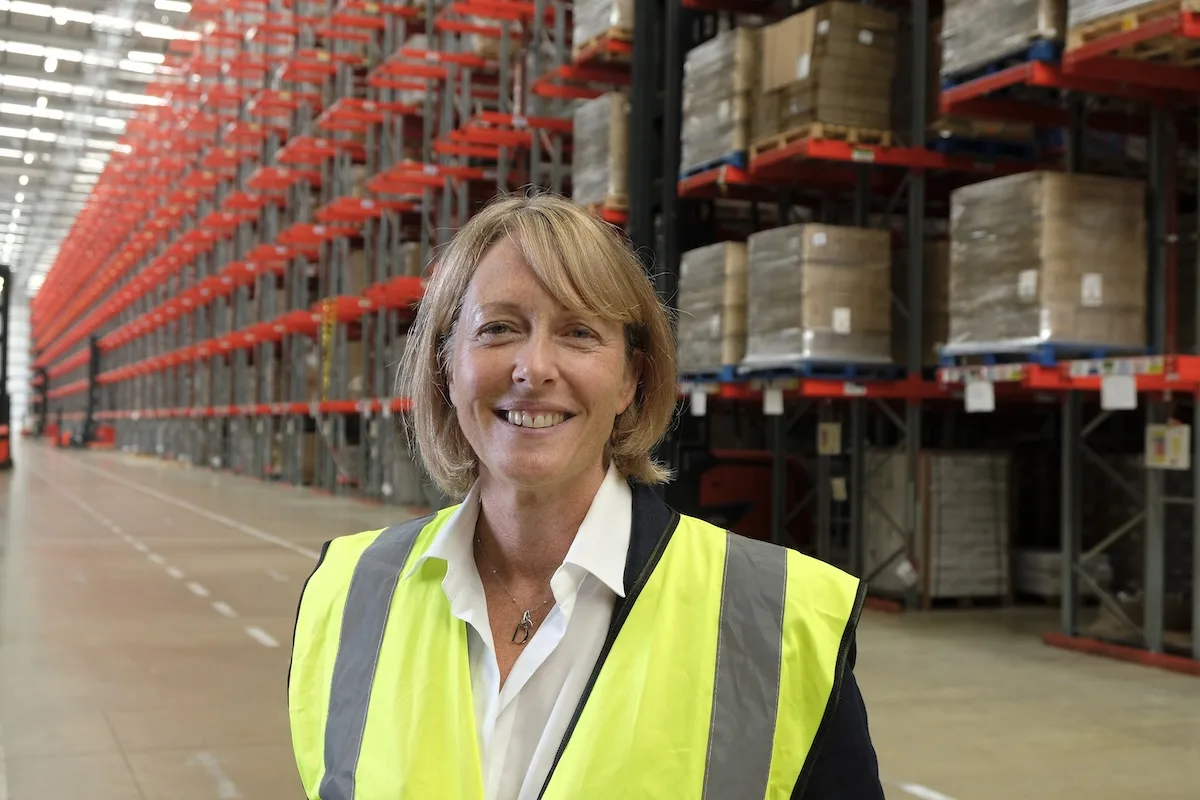
THE PRESSURE is being felt across the market. “We just seem to be existing in a cost-up environment,” says Dionne. For customers, the implications are immediate: hold too much stock and cash is tied up; hold too little and service suffers. In between lies the difficult balancing act and an area where 3PL providers increasingly add value.
At Europa Warehouse, that has sharpened the focus on flexibility, agility and disciplined resource management. But Dionne is quick to point out that no operator has found this easy. “I’d be surprised if any operators are having a straightforward time of it at the moment,” she says.
If uncertainty is the defining market condition, value has become the decisive commercial test.
Redpath says customers are under intense pressure to extract savings and efficiencies from their logistics models while preserving service to their own end users. “Our customers are really pushing hard for economies and savings, making sure they are getting the value out of the solution,” she explains.
That demand is inseparable from wider consumer behaviour, as household costs rise, end customers are more selective in how and where they spend. For logistics providers, that means warehousing and fulfilment operations must demonstrate not only reliability, but measurable commercial value.
One practical example is bonded warehousing. In Redpath’s view, it remains one of the clearest “low-hanging fruit” opportunities available to importers.
If goods arrive from Asia in January but are not dispatched until June, why pay duty and VAT immediately? “Why expend the money on hefty duties when goods land in the UK if you don’t have to?” she asks. Delaying those payments until goods leave storage can materially improve cash flow, particularly in a high-cost environment.
For brands, she argues, this should be a basic consideration when selecting a provider: not just where stock is stored, but how warehousing structure supports working capital.
Dionne is equally clear that automation matters—but only when it solves a real operational problem at the right price.
“Not just automation for the sake of automation,” she says.
That philosophy is evident in Europa’s use of robotic technology through its partnership with Dexory. Rather than targeting flashy transformation narratives, the focus has been on using robotics to handle repetitive, manual stock-counting and inventory management tasks more effectively.
Why deploy large teams to complete those activities, Dionne asks, when robotic solutions can perform the front end of the process in a more cost-effective way?
Europa implemented the Dexory system shortly before Christmas last year, and Dionne says the benefits have already been tangible.
“The digital twinning is fantastic,” she says. “The ease of access to data in a really usable manner” has been a major advantage, allowing teams to see exactly where an issue may exist, understand what is wrong, and act quickly to correct it.
At Europa’s Corby warehouse, which has more than 90,000 rack locations and annually manages 5 million orders, that matters. Counting inventory weekly across a facility of that scale in a low-cost, low-labour way is, as Dionne puts it, “absolutely invaluable.”
Customers are increasingly reluctant to commit to long-term contracts, with two- to three-year terms now far more common than five- or ten-year deals. That makes speculative capital investment much harder to justify, even for sizeable operators.
For Dionne, the answer lies in “small touches across more everyday tasks”: lower-entry-point technologies that improve operations without demanding huge capital exposure. Europa is currently exploring RFID, additional robotic solutions and other modular technologies that can be introduced incrementally.
For logistics businesses, that may be the defining lesson of today’s market. In an era shaped by disruption, resilience is no longer enough. Operators must be agile, commercially sharp and willing to adopt technology selectively but decisively.